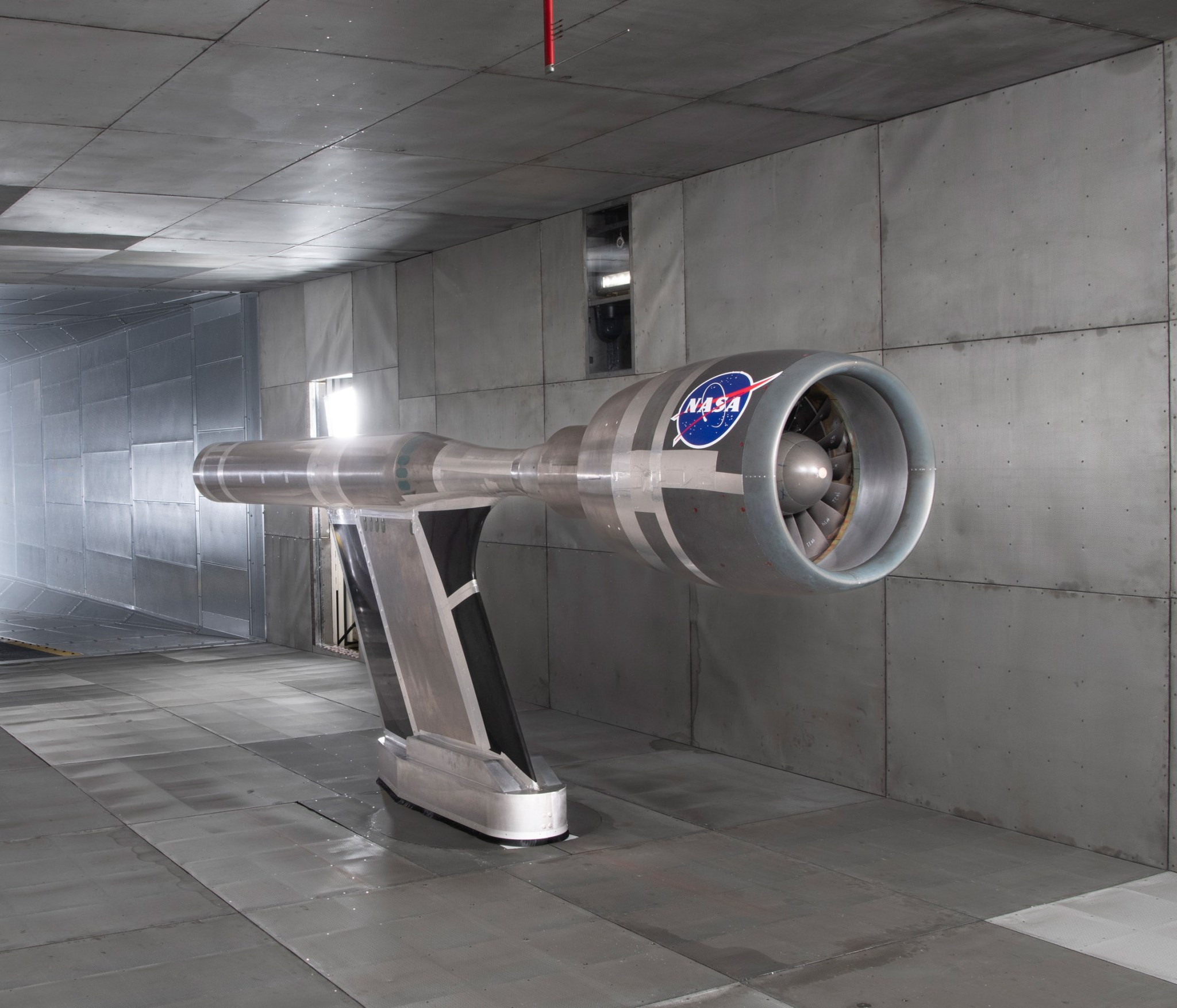
NASA Glenn Research Center uses specialised facilities including wind tunnels and anechoic domes to study and reduce aircraft engine noise, testing nozzle designs and jet acoustics for cleaner, quieter aviation.
01Summary
- 01Key facilities include the 9- by 15-Foot Low-Speed Wind Tunnel (9x15 LSWT), the Aero-Acoustic Propulsion Laboratory (AAPL), and the Nozzle Acoustic Test Rig (NATR).
- 02The AAPL is a 65-foot geodesic dome lined with 17,000 fibre-glass wedges to absorb sound, built in 1993.
- 03The Small Hot Jet Acoustic Rig (SHJAR) can test nozzles up to 5 cm in diameter at speeds up to Mach 2.0 and 800 K.
- 04Chevron nozzles now flying on commercial aircraft were first developed during a NASA-led test in 1997 using the NATR.
- 05The NATR can simulate take-off and landing conditions up to Mach 0.35 and tests scale models of military and commercial nozzles.
02Why it matters
This research directly helps reduce aircraft noise for communities near airports and supports the development of quieter, more efficient engine designs for future aircraft.
Pulse AIAsk about this story
Answers are generated by AI from the story summary; they are not investment, health or legal advice.