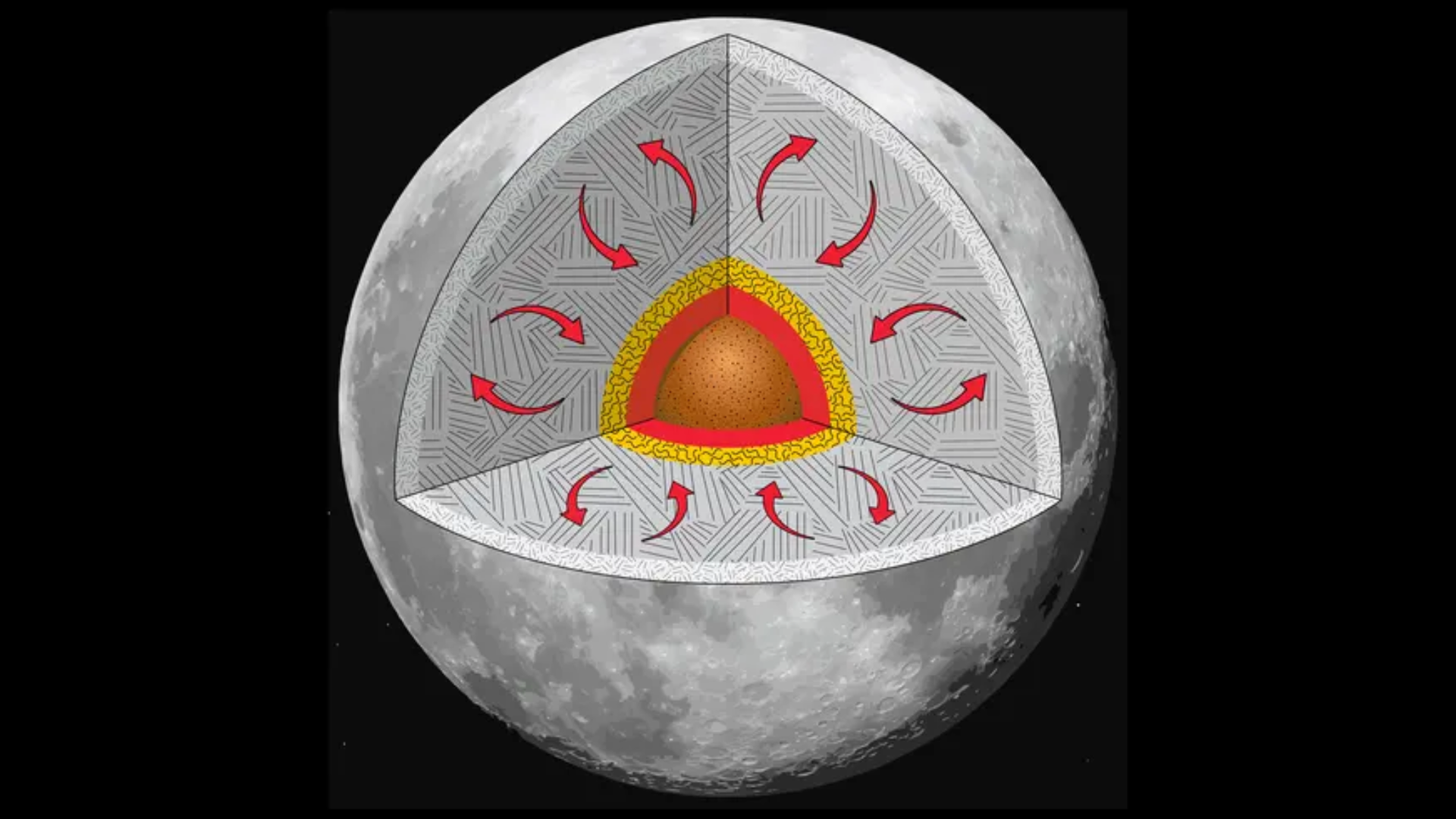
Scientists have determined that the moon's radius has shrunk by about 45 meters over the past 400–800 million years, based on over 10,000 young faults identified on its surface.
01Summary
- 01Analysis of images from the Lunar Reconnaissance Orbiter Camera revealed more than 10,000 young faults on the moon.
- 02The moon's radius has decreased by approximately 148 feet (45 meters) over the last 400 to 800 million years.
- 03The shrinking is caused by the moon’s interior cooling down from its formation about 4.5 billion years ago.
- 04Areas of the moon with a thicker crust have fewer faults, indicating greater stability.
- 05The study was published on October 14 in The Planetary Science Journal.
02Why it matters
This research helps scientists understand the geologic history of the moon and how cooling planetary bodies evolve over time. It also has implications for future lunar missions, as ongoing fault activity could affect landing sites and surface stability.
Pulse AIAsk about this story
Answers are generated by AI from the story summary; they are not investment, health or legal advice.