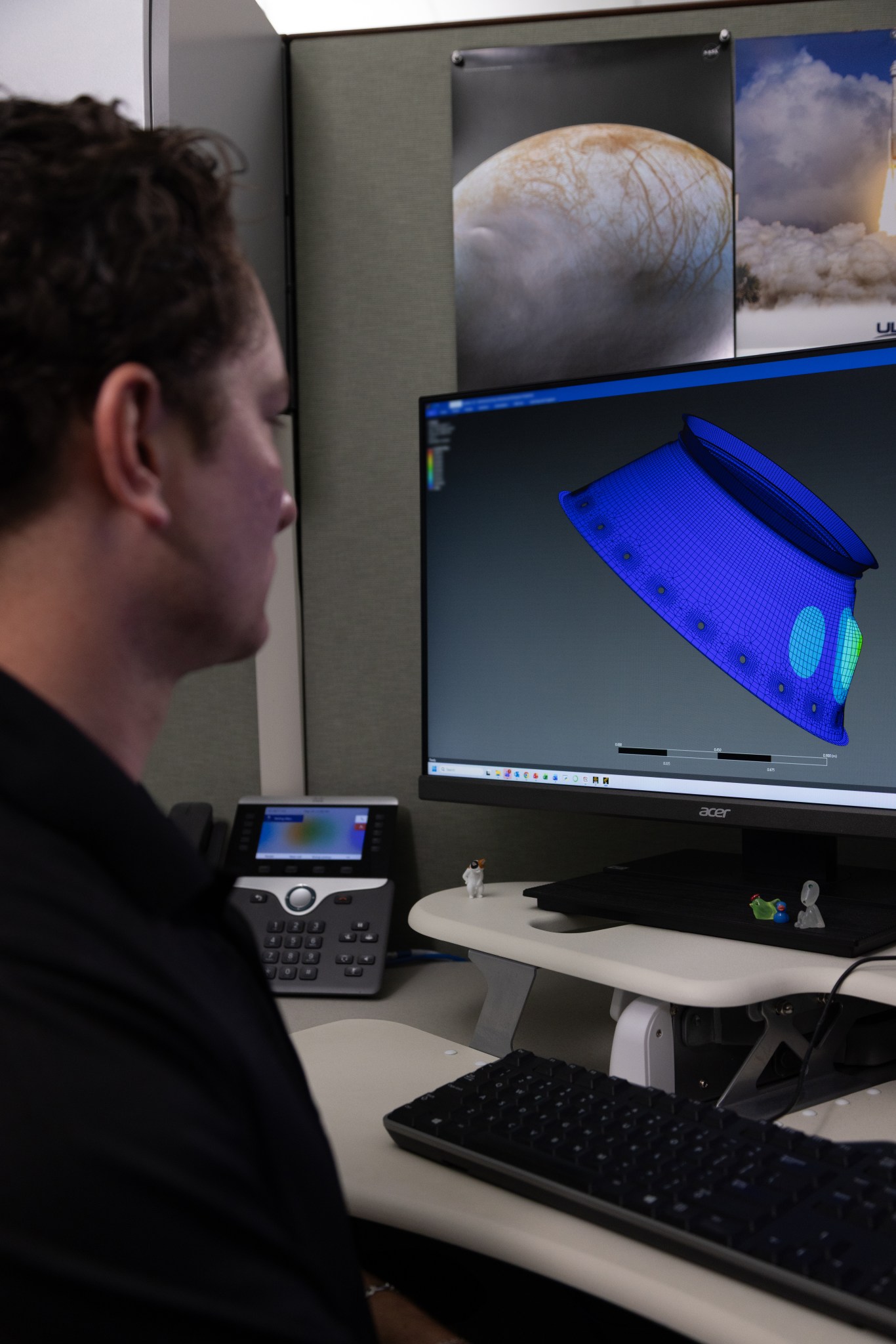
NASA engineers have streamlined shock and vibration analysis for spacecraft using a commercial finite element modelling tool in a novel way, improving mission safety by predicting structural failures before hardware is built.
01Summary
- 01The Dynamic Environments Group at NASA Kennedy has developed a standardised modelling workflow using commercial digital software for finite element analysis.
- 02The tool was used for the first time to certify a commercial launch provider’s rocket, identifying the need for shock testing during transport.
- 03Brian Beaver, chief of the Flight Analysis Division, said the method helps predict behaviour under extreme conditions and spot weak points early.
- 04Alex Hardt, an aerospace engineer, noted the software replaces older methods and saves months by allowing independent analysis without waiting for external reports.
- 05The approach has already provided new insights into shock dynamics that would previously have required extensive manual modelling.
02Why it matters
This analysis helps ensure that delicate instruments on NASA missions survive the intense forces of launch and ascent, reducing the risk of costly failures on the ground where problems can be fixed.
Pulse AIAsk about this story
Answers are generated by AI from the story summary; they are not investment, health or legal advice.