00In brief
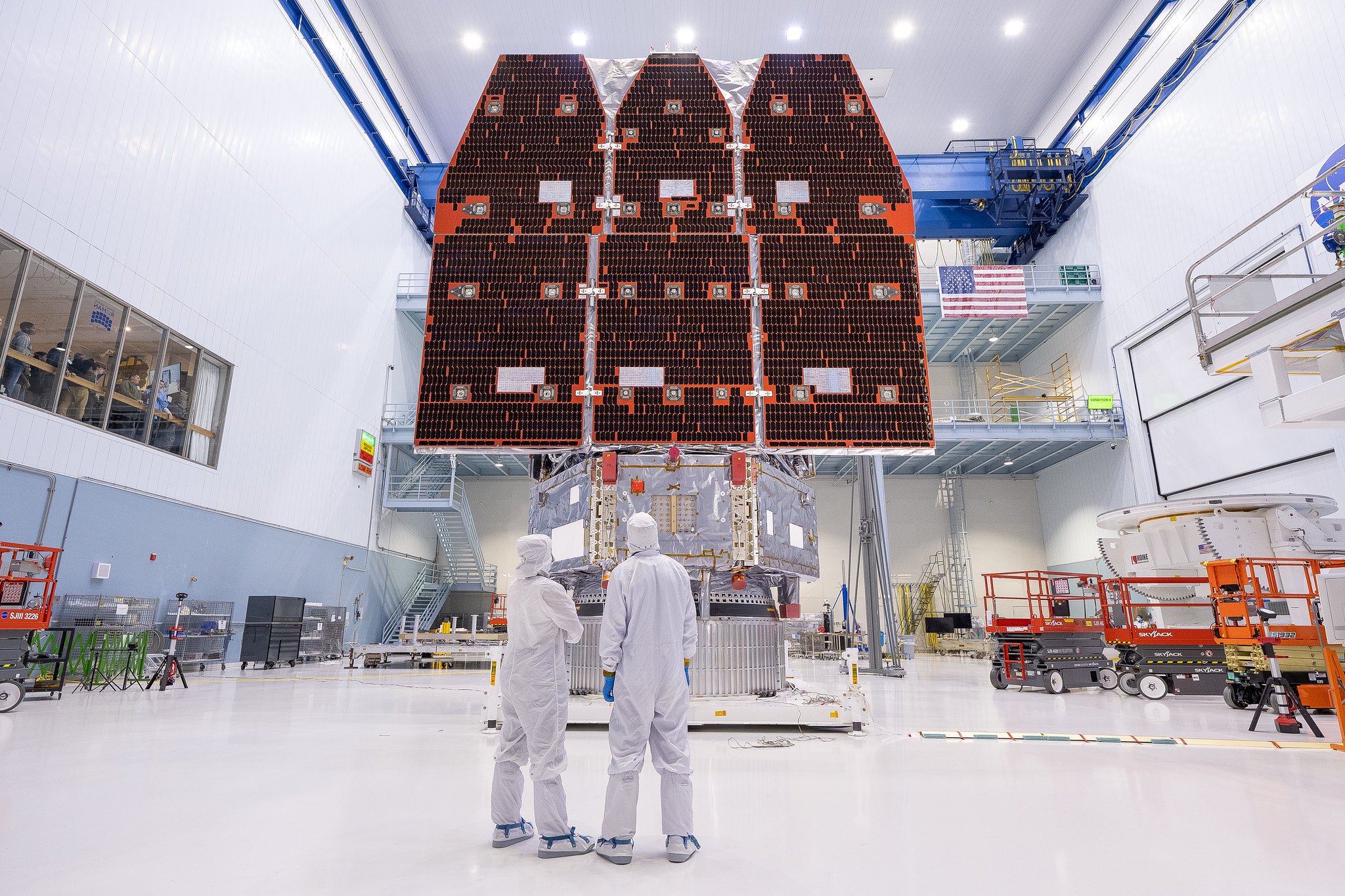
The Roman Space Telescope launched on August 30, 2026, from NASA's Kennedy Space Center on a SpaceX Falcon Heavy rocket.[1]
NASA Administrator Jared Isaacman will participate in a fireside conversation moderated by science journalist Alex Witze at the release event.[2]
The telescope will study dark energy, dark matter, exoplanets, and astrophysics using its large field of view and infrared vision.[1][2]
01What happened
The Roman Space Telescope launched on August 30, 2026, from NASA's Kennedy Space Center aboard a SpaceX Falcon Heavy rocket, embarking on a three-month journey to the Sun-Earth Lagrange Point 2. During the commissioning process, the telescope's systems were calibrated and prepared for science operations. It will use its wide field of view and infrared vision to survey vast areas of the sky, aiming to explore dark energy, dark matter, exoplanets, and cosmic history.[1][2]
02Who said what
According to NASA, the first images will showcase the telescope's scientific capabilities and will be posted on the agency's website simultaneously with the live event. The AGU source stated that the mission scientists will take questions from reporters at a 9:00 a.m. PST press briefing, which will be embargoed until the public release during the plenary session.[1][2]
NASA also invited the public to claim a 'corner of the universe' by selecting a pixel from one of the first images, which will generate a digital trading card with key information that can be shared on social media.[1]
03Where the sources differ
Source 1 (NASA) specified the release time as 3:30 p.m. EST (12:30 p.m. PST), while source 2 (AGU) wrote '12:30 a.m. – 1:15 p.m. PST,' which appears to be a typographical error, as the context and other details align with the same event. Additionally, NASA mentioned a three-month journey to L2, but the launch date of August 30 and the December 7 release suggest a journey of about 99 days, which is consistent with the three-month timeline.[1][2]
The two sources list different sets of contacts: NASA provided Alise Fisher and Claire Andreoli, while AGU added Liza Lester as an AGU press contact.[1][2]
04What is still unknown
The sources do not specify which celestial targets the first images will depict, such as specific galaxies, exoplanets, or nebulae. Both NASA and AGU are silent on the exact content of the images.[1][2]
It is unclear whether the coronagraph technology demonstration, which aims to directly image exoplanets, will be part of the initial data release or featured in the first images. Neither source provided details on this.[1][2]
The sources do not reveal the duration of the public event beyond the plenary session or whether additional images will be released later in the AGU meeting week.[1][2]