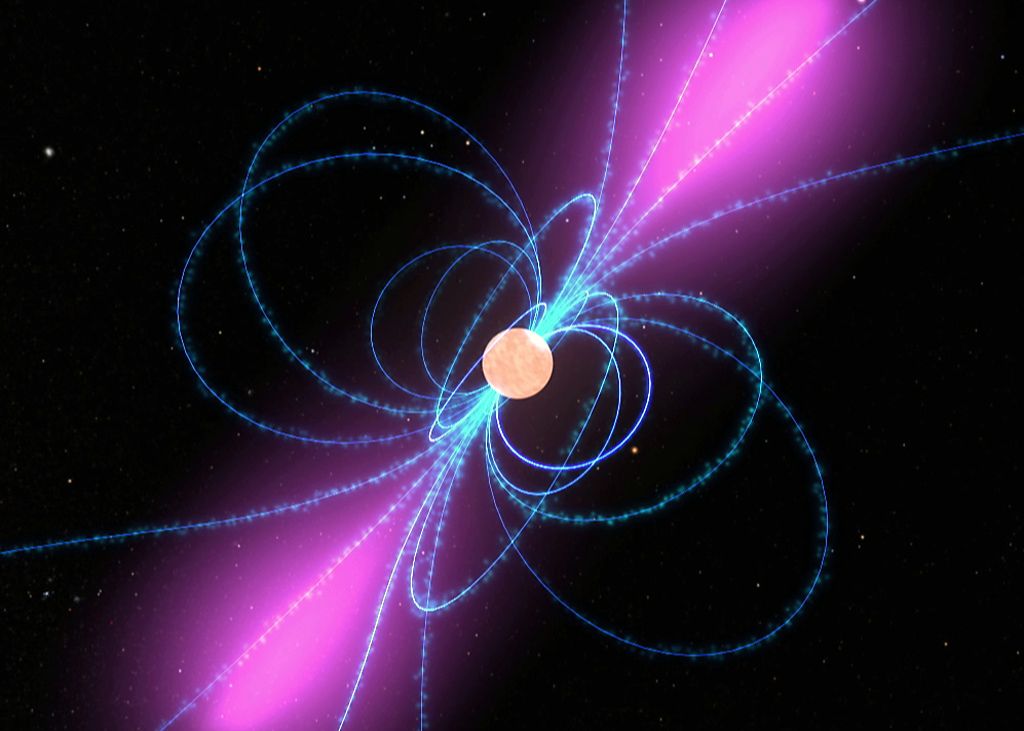
On 28 November 1967, Jocelyn Bell Burnell and Antony Hewish detected the first pulsar, a rapidly spinning neutron star, initially nicknaming the signal Little Green Men 1 before confirming it was a natural phenomenon.
01Summary
- 01The first pulsar was discovered by Jocelyn Bell Burnell and Antony Hewish on 28 November 1967.
- 02The pulsar, located in the constellation Vulpecula, emitted regular pulses every 1.33 seconds.
- 03The signal was jokingly called Little Green Men 1 until additional pulsars ruled out an alien origin.
- 04The discovery confirmed the existence of neutron stars, previously only theoretical.
- 05Pulsars are now used as precise clocks, tools for testing general relativity, and navigation aids for spacecraft.
02Why it matters
This discovery opened a new window on the universe, confirming neutron stars exist and providing astronomers with natural clocks that test fundamental physics and aid spacecraft navigation.
Pulse AIAsk about this story
Answers are generated by AI from the story summary; they are not investment, health or legal advice.