00In brief
The star IRAS 06530-0213 is about 12,000 light-years from Earth in the constellation Monoceros.[1][2]
ALMA consists of 66 radio antennas located in northern Chile.[1][2]
Unusually high amounts of isotopes of carbon, oxygen and nitrogen were found around the star.[1][2]
The hourglass-shaped nebula around the star began forming about 700 years ago.[1][2]
01What happened
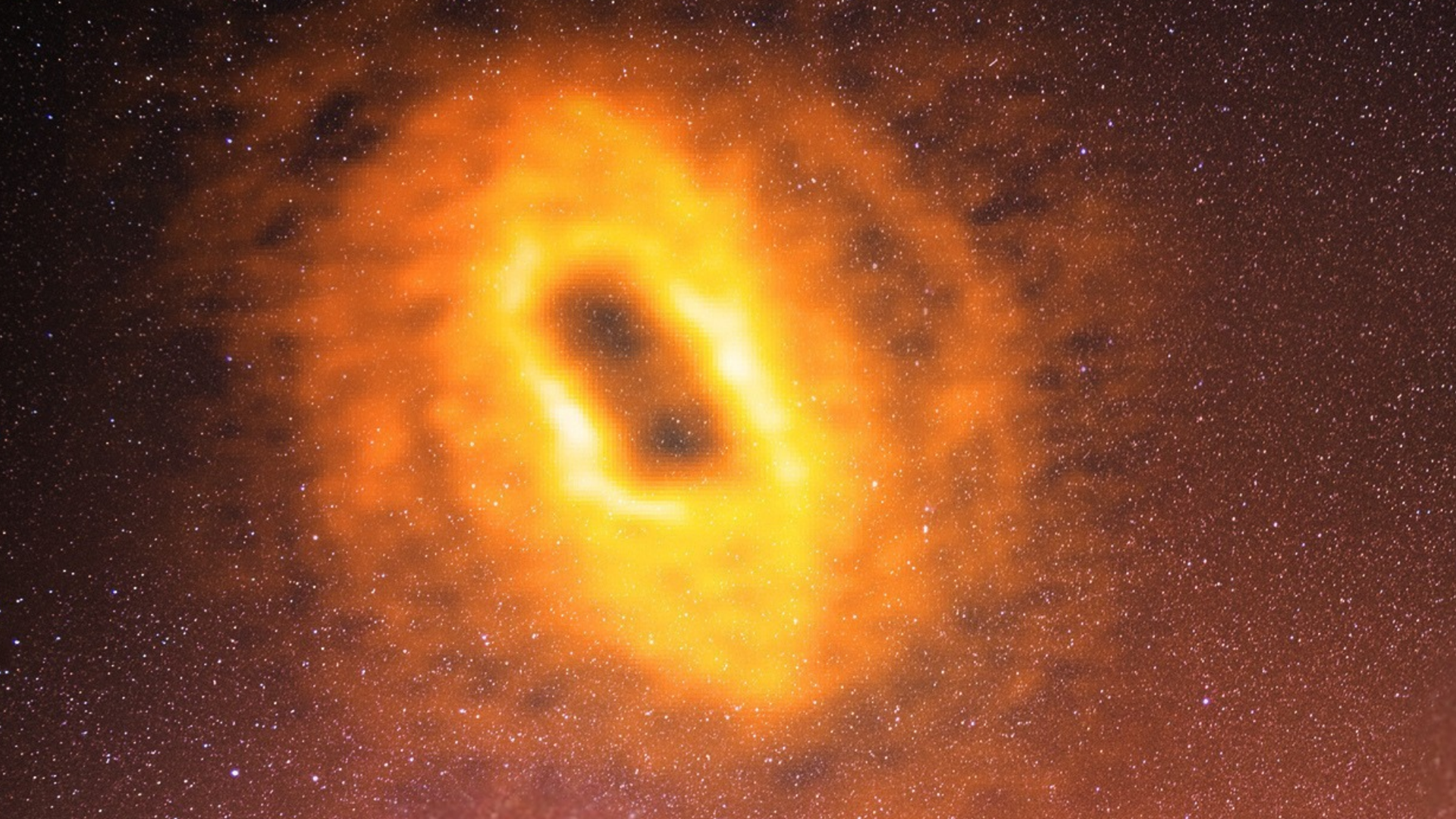
For the first time, astronomers have directly observed the final thermal pulse of a dying Sun-like star, using the Atacama Large Millimeter/submillimeter Array (ALMA) in Chile. The target, a star catalogued as IRAS 06530-0213 located 12,000 light-years away in the constellation Monoceros, was caught in the act of transitioning from a red giant to a planetary nebula. The observations reveal a giant ring of gas that researchers describe as a fossilised record of the star's last nuclear flare-up, according to a NASA Jet Propulsion Laboratory-led study published in 2026.[1][2]
The gas shell ejected by the star is about half a light-year across and was released roughly 6,500 years ago. Following the pulse, the star lost mass at a slower rate for about 2,000 years, after which the mass loss rate increased sharply over the next 1,000 years, producing a tangled web of filaments. The inner hourglass-shaped nebula began to take shape only about 700 years ago, indicating that the red giant phase ended quite recently in cosmic terms.[1][2]
The ALMA data also show an unexpected abundance of heavy isotopes of carbon, oxygen and nitrogen in the material surrounding the star, defying current models of how stars like the Sun forge and distribute elements. Additionally, scientists failed to detect the compact dust disk that is usually found around such dying stars, which is thought to accompany a close companion star that helps sculpt the ejected gas into bipolar shapes.[1][2]
02Where the sources differ
03What is still unknown
The sources do not explain why the observed isotopes of carbon, oxygen and nitrogen are present in unexpected proportions. Neither source provides a mechanism for how the missing compact dust disk could have briefly existed and then dissipated without leaving any detectable trace. The sources also do not clarify whether the spiral-shaped filaments around IRAS 06530-0213 are indeed caused by an unseen binary companion or by another process. Finally, the sources leave open the question of how the Sun's own final thermal pulse will compare in terms of duration and material ejection to that seen in IRAS 06530-0213.[1][2]