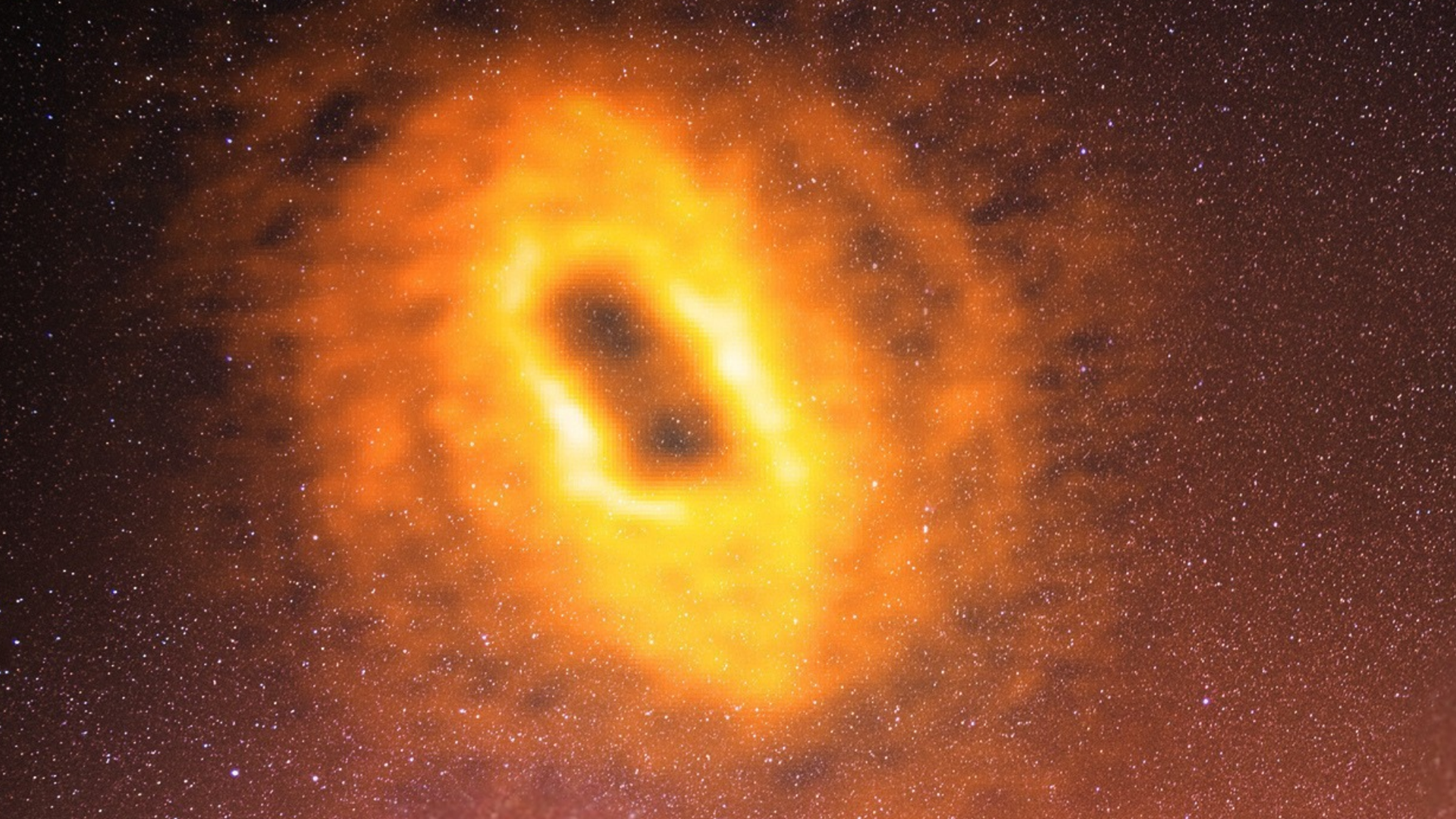
Observations of a star 12,000 light-years away have revealed a fossilised gas ring from its final thermonuclear pulse, offering the first direct evidence of a phase that may alter predictions for the Sun's death.
01Summary
- 01The Atacama Large Millimeter/submillimeter Array (ALMA) in Chile observed star IRAS 06530-0213, 12,000 light-years away in Monoceros.
- 02A giant ring of gas half a light-year wide, ejected about 6,500 years ago, is the first direct evidence of a star's last thermal pulse before it becomes a planetary nebula.
- 03The hourglass-shaped nebula around the star began forming around 700 years ago, indicating the red giant phase ended very recently in cosmic terms.
- 04Unexpected abundances of heavy isotopes of carbon, oxygen and nitrogen were found, challenging models of element formation and mixing in such stars.
- 05No compact dust disk was detected around the star, suggesting a brief disk may have powered jets that sculpted the hourglass shape and then faded.
02Why it matters
This discovery provides a direct glimpse of a stage in stellar death that was previously only theoretical, helping scientists refine models of how the Sun will end its life billions of years from now.
Pulse AIAsk about this story
Answers are generated by AI from the story summary; they are not investment, health or legal advice.