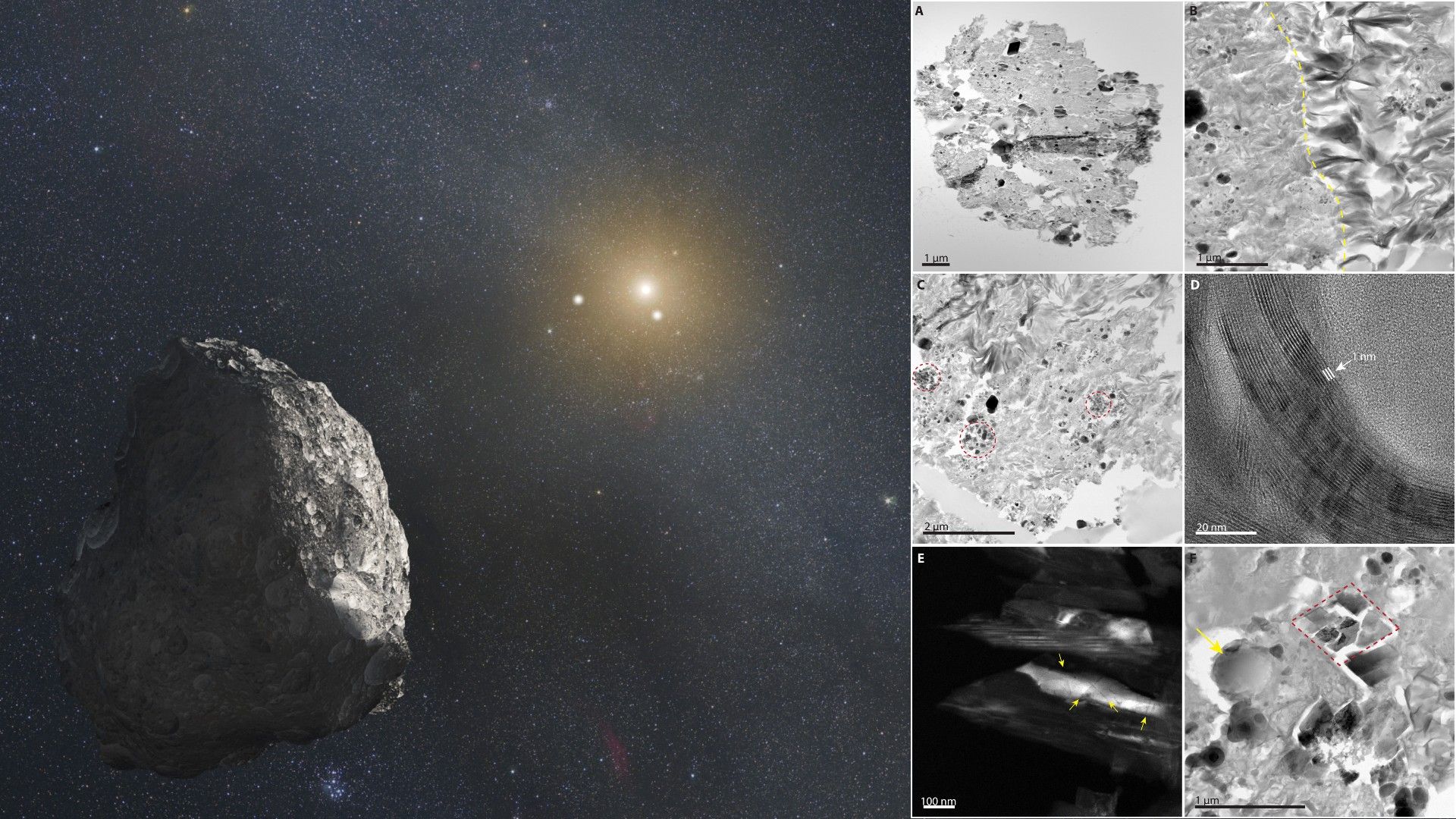
Analysis of 12 dust grains from the Kuiper Belt, collected in Earth's stratosphere, reveals a reservoir of water with heavy oxygen isotopes in the outer solar system, isolated from the inner regions by Saturn or ice giants.
01Summary
- 01The grains were captured by NASA's ER-2 aircraft and analysed using electron microscopy and ion microprobe techniques.
- 02They contain hydrated clay minerals formed from interactions between silicate rock and water enriched with oxygen-18 or oxygen-17.
- 03The team calculated a 15% greater ratio of oxygen-18 to oxygen-16 in Kuiper Belt water than in Earth's oceans.
- 04Most meteorites lack heavy oxygen, suggesting a barrier—likely Saturn or ice giants—prevented mixing between inner and outer solar system reservoirs.
- 05The grains originated 4.5 billion years ago and were delivered to Earth by Poynting–Robertson drag.
02Why it matters
This discovery sheds light on how water and other materials were distributed in the early solar system, helping refine models of planet formation and the origins of Earth's water.
Pulse AIAsk about this story
Answers are generated by AI from the story summary; they are not investment, health or legal advice.