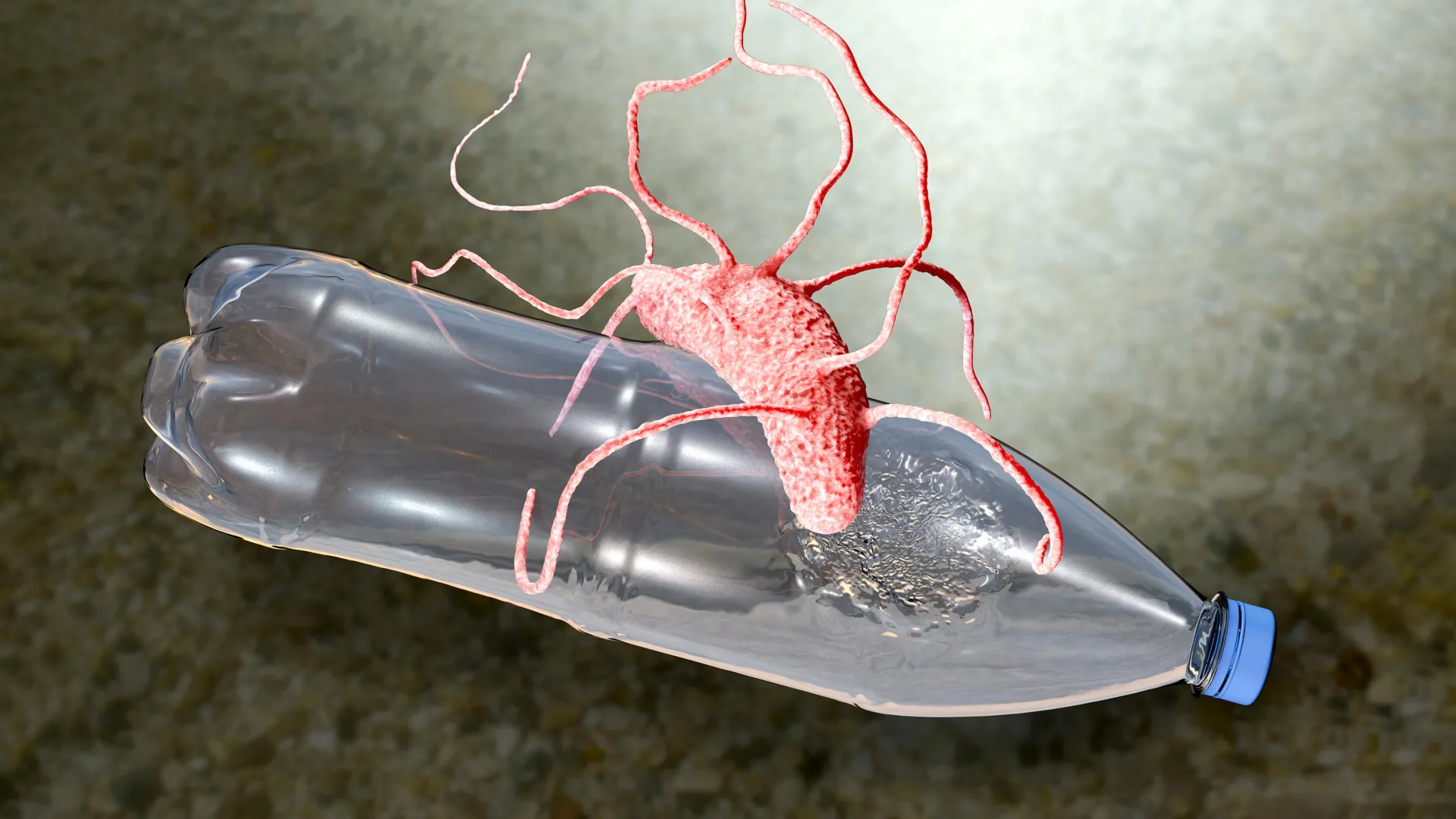
A newly discovered 'Pac-Man enzyme' helps bacteria break down biodegradable plastics and also digests penicillin, hinting at a link with antibiotic resistance.
01Summary
- 01University of Konstanz researchers found that biodegradable plastics fully decomposed in forest soil within 250 to 330 days, while high-density polyethylene showed almost no degradation.
- 02The enzyme, named for its wide active site, can break down long-chain aliphatic polyesters and also degrade penicillin.
- 03Electron microscopy revealed holes in the plastic films the size and shape of bacterial cells, suggesting bacteria physically invade the material.
- 04The findings were published in The ISME Journal.
- 05The study buried LCAP bioplastic film in humus at the university's botanical garden and conducted parallel laboratory experiments over a year.
02Why it matters
This matters because it reveals a biological mechanism that could be harnessed to degrade biodegradable plastics more efficiently, but also raises concerns about potential connections between plastic breakdown and antibiotic resistance.
Pulse AIAsk about this story
Answers are generated by AI from the story summary; they are not investment, health or legal advice.