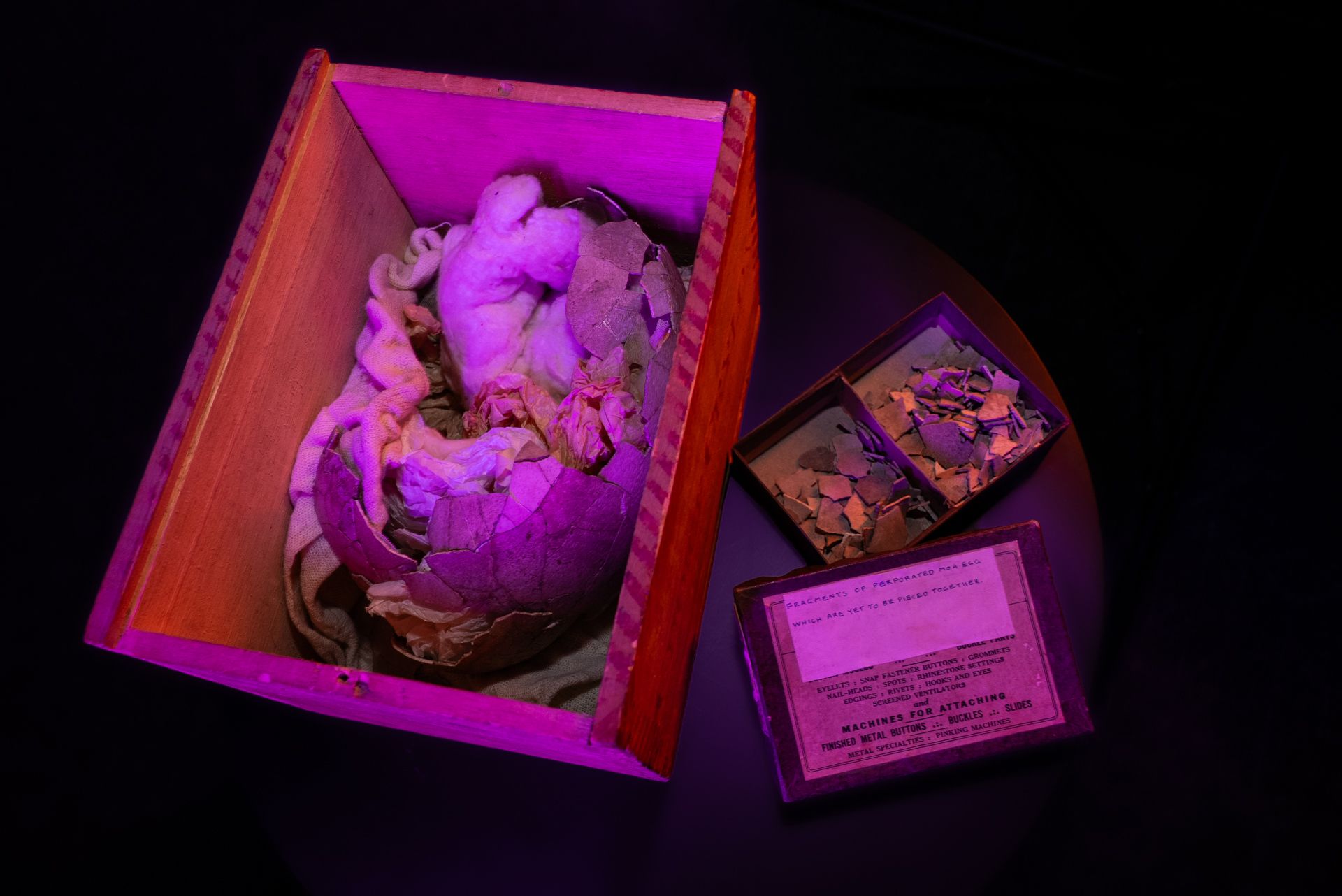
The egg, one of only a handful in existence, will return to New Zealand after 60 years in an American collection to aid de-extinction research.
01Summary
- 01The egg measures 22 by 17 centimetres and has twice the volume of an ostrich egg.
- 02Fewer than 40 sufficiently complete moa eggs exist in public collections; only eight retain 90% or more of their original shell.
- 03Discovered in 1966, the egg was bought at a Colorado auction in 2026 by Peter Jackson and Colossal Biosciences.
- 04The egg is expected to arrive in New Zealand by December 2026.
- 05Jackson and Fran Walsh invested $15 million in Colossal's moa de-extinction project in July 2025.
02Why it matters
This acquisition could provide DNA clues to help revive the giant moa, a species of deep cultural significance to the Ngāi Tahu Māori tribe and a symbol of New Zealand's natural heritage.
Pulse AIAsk about this story
Answers are generated by AI from the story summary; they are not investment, health or legal advice.