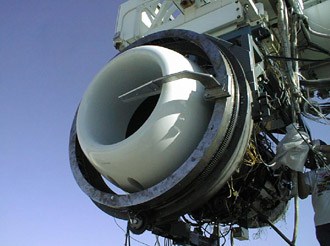
NASA Glenn uses specialised instruments like rotating microphone rakes and laser velocimeters to measure airflow and sound, providing data that the global aviation noise reduction community relies on to validate noise prediction software.
01Summary
- 01NASA Glenn engineers pioneered rotating microphone rakes in the 1990s to capture tonal noise data unobtainable with stationary microphones.
- 02The Array48 microphone system has been used to locate noise sources in scale-model jet flows, an open rotor fan model, and an F404 military engine.
- 03Hotwire probes and Laser Doppler Velocimeters measure air velocity upstream, downstream, and between rotor and stator in experimental propulsors.
- 04Annoying tone noises are caused by periodic disturbances like fan blade wakes interacting with stator vanes, while broadband noise stems from turbulent air ingestion.
- 05Data from NASA Glenn experiments are routinely used to validate turbofan engine noise calculations.
02Why it matters
This matters because quieter aircraft engines reduce noise pollution for communities near airports and enable stricter noise regulations, directly affecting quality of life and aviation industry standards.
Pulse AIAsk about this story
Answers are generated by AI from the story summary; they are not investment, health or legal advice.