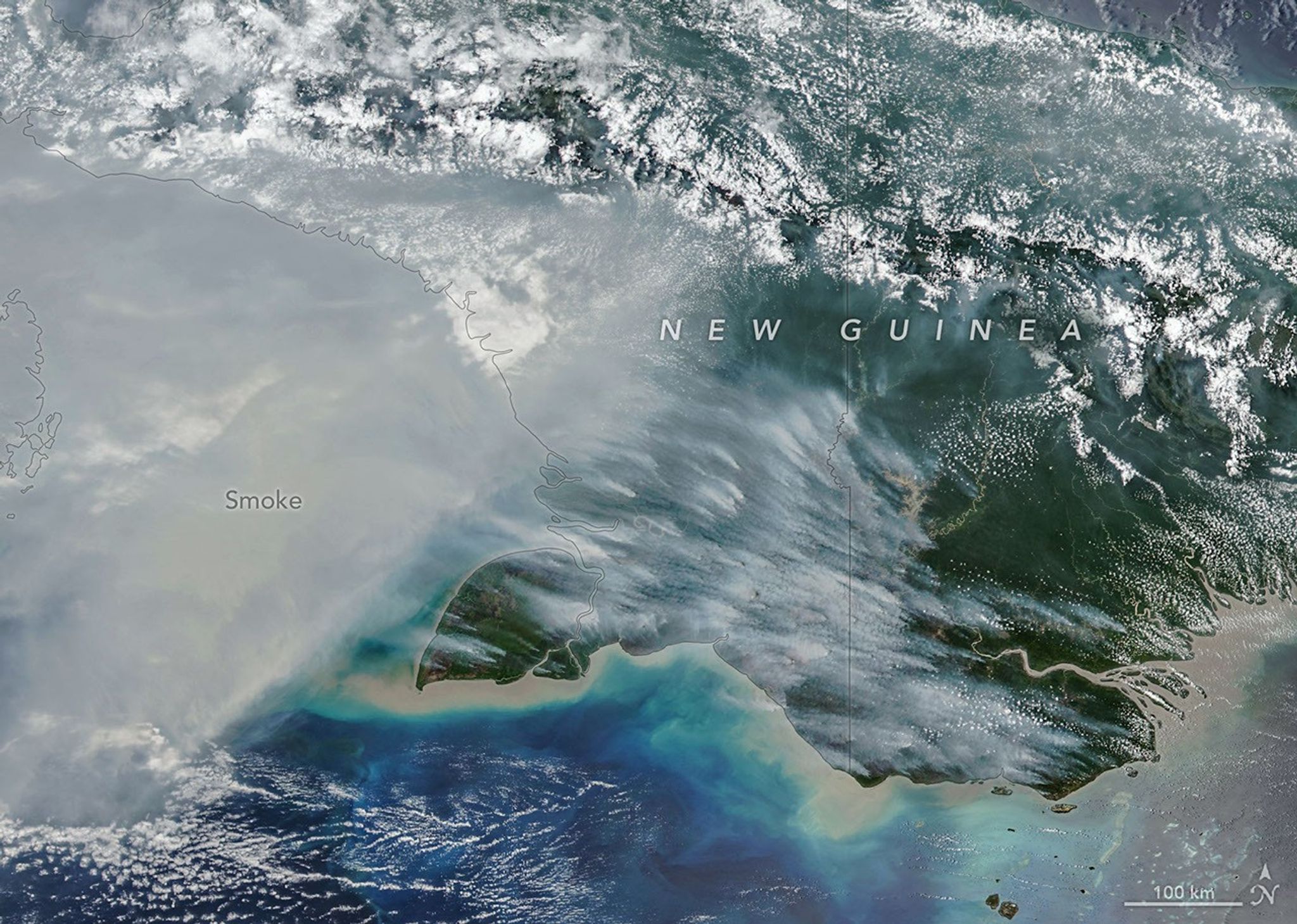
Drought and El Niño conditions in New Guinea have led to widespread fires, causing record carbon emissions, severe air pollution, and disruptions to flights and schools.
01Summary
- 01Fires in Papua New Guinea released nearly 32 megatons of carbon by October 19, 2026, the highest on record for that date.
- 02Carbon emissions on the Indonesian side exceeded 35 megatons, the third highest after 1997 and 2015.
- 03Southern Papua New Guinea experienced over 90 consecutive days without rain, with precipitation 5–10% of normal since August.
- 04Human-set fires, for crop management and land clearing, spread uncontrollably in dry conditions, especially in savannas and grasslands.
- 05Indonesian Papua lost 27,000 hectares of primary forest in 2025, nearly double the 2024 total and the most since 2017.
02Why it matters
The severe fires are causing immediate health crises through toxic smoke, disrupting daily life and travel, while also accelerating deforestation and carbon emissions in a globally significant rainforest region.
Pulse AIAsk about this story
Answers are generated by AI from the story summary; they are not investment, health or legal advice.