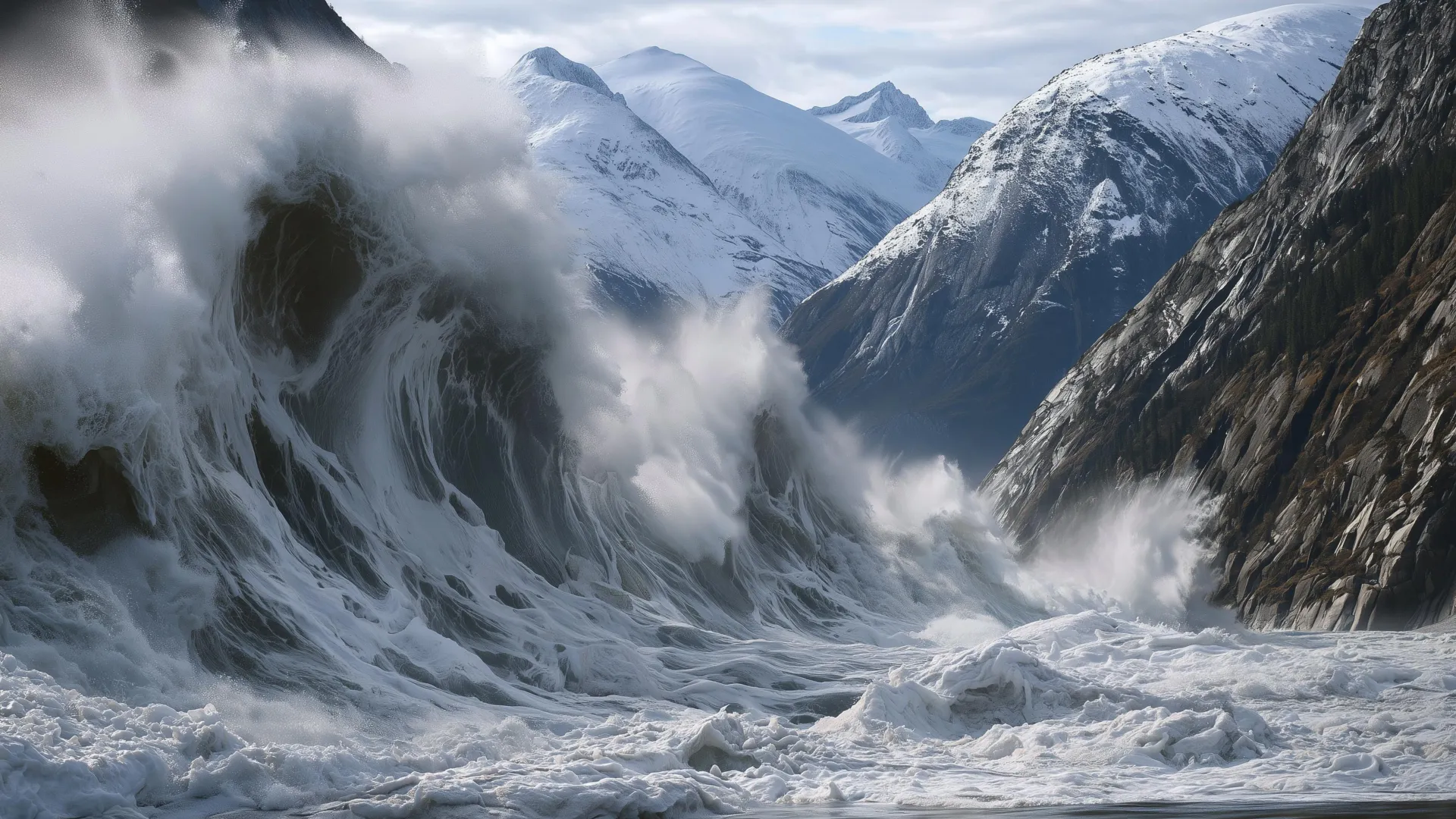
A huge landslide in Alaska triggered a tsunami that sent water 1,580 feet up a mountainside hours after tourists had left the area. Scientists say retreating glaciers and heavy rain created the conditions, and that similar disasters are becoming more likely in Arctic fjords.
01Summary
- 01The tsunami struck shortly after 5am on 9 August 2025, when no ships were nearby, but 12 hours earlier tourists had been visiting the South Sawyer Glacier.
- 02The water and debris reached 481 metres up the opposite side of the fjord, stripping the walls to bare rock.
- 03The glacier below the landslide had retreated more than half a kilometre in the two months before the collapse.
- 04Thousands of small seismic tremors emanated from the slide area in the days prior to the failure.
- 05Scientists believe that existing monitoring systems could have issued alerts at least a day in advance.
02Why it matters
This matters because similar landslide-tsunami hazards are emerging across the Arctic as glaciers retreat, threatening ships and coastal communities. An alert system could save lives, but none currently operates at this scale in the US.
Pulse AIAsk about this story
Answers are generated by AI from the story summary; they are not investment, health or legal advice.