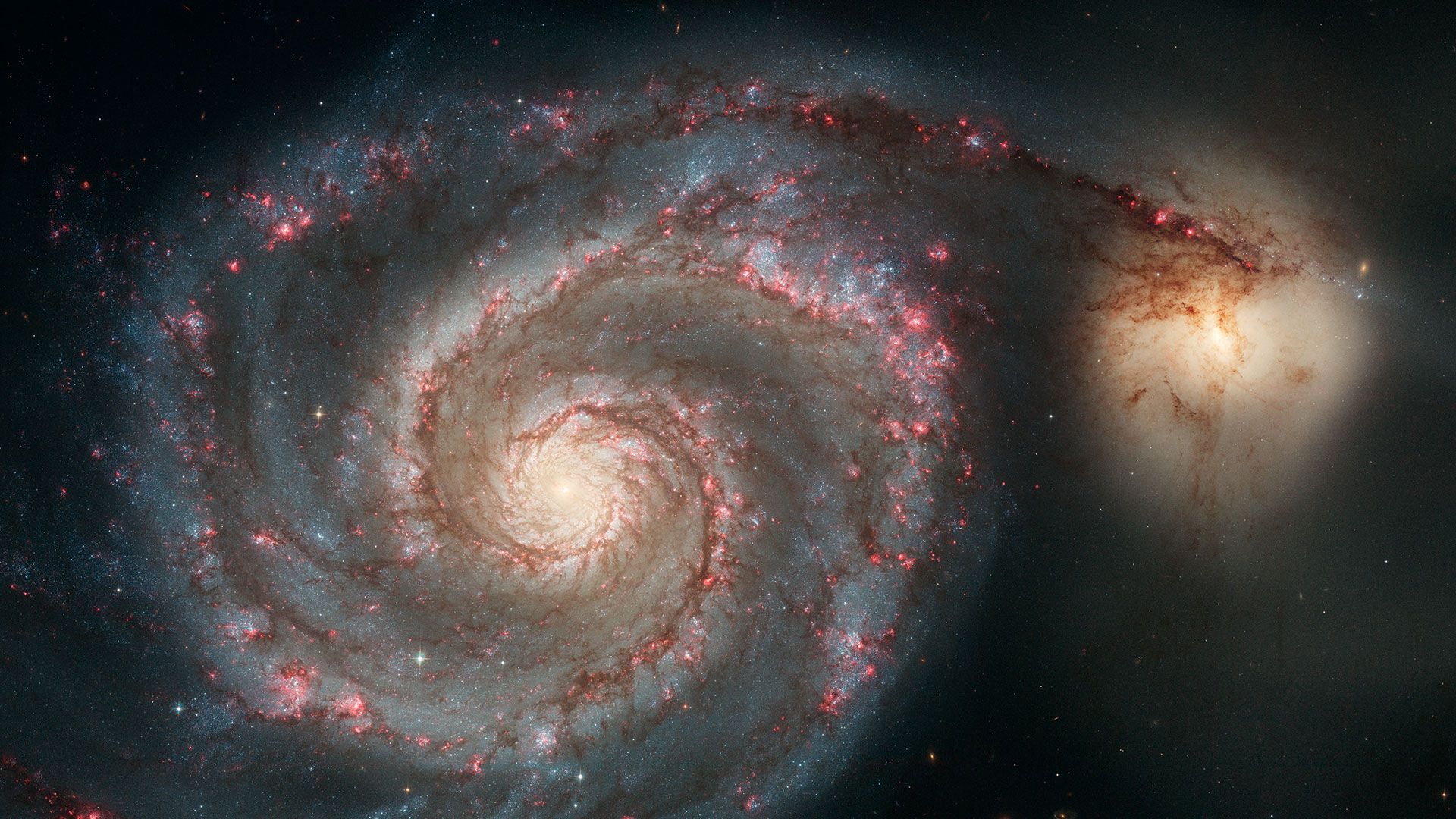
Charles Messier catalogued the Whirlpool Galaxy in 1773 while searching for comet-like objects, long before astronomers knew it was a galaxy. Later work showed its spiral nature and placed it about 31 million light-years away.
Follow the storyOct5 stories
01Summary
- 01On 13 October 1773, French astronomer Charles Messier discovered what is now called the Whirlpool Galaxy, or Messier 51.
- 02Messier was searching the sky for objects that might be mistaken for comets and listed the object as M51.
- 03He did not see the galaxy's spiral structure, and it was later identified by Edwin Hubble as a galaxy.
- 04The Whirlpool Galaxy is about 31 million light-years from Earth and has a brightness magnitude of 8.4.
- 05NASA says M51 can be seen with a small telescope in the constellation Venatici, most easily during May.
02Why it matters
The discovery matters because it shows how astronomers gradually learned that some fuzzy objects in the sky were whole galaxies. It also remains a well-studied nearby spiral galaxy that can be observed from Earth with modest equipment.
Pulse AIAsk about this story
Answers are generated by AI from the story summary; they are not investment, health or legal advice.