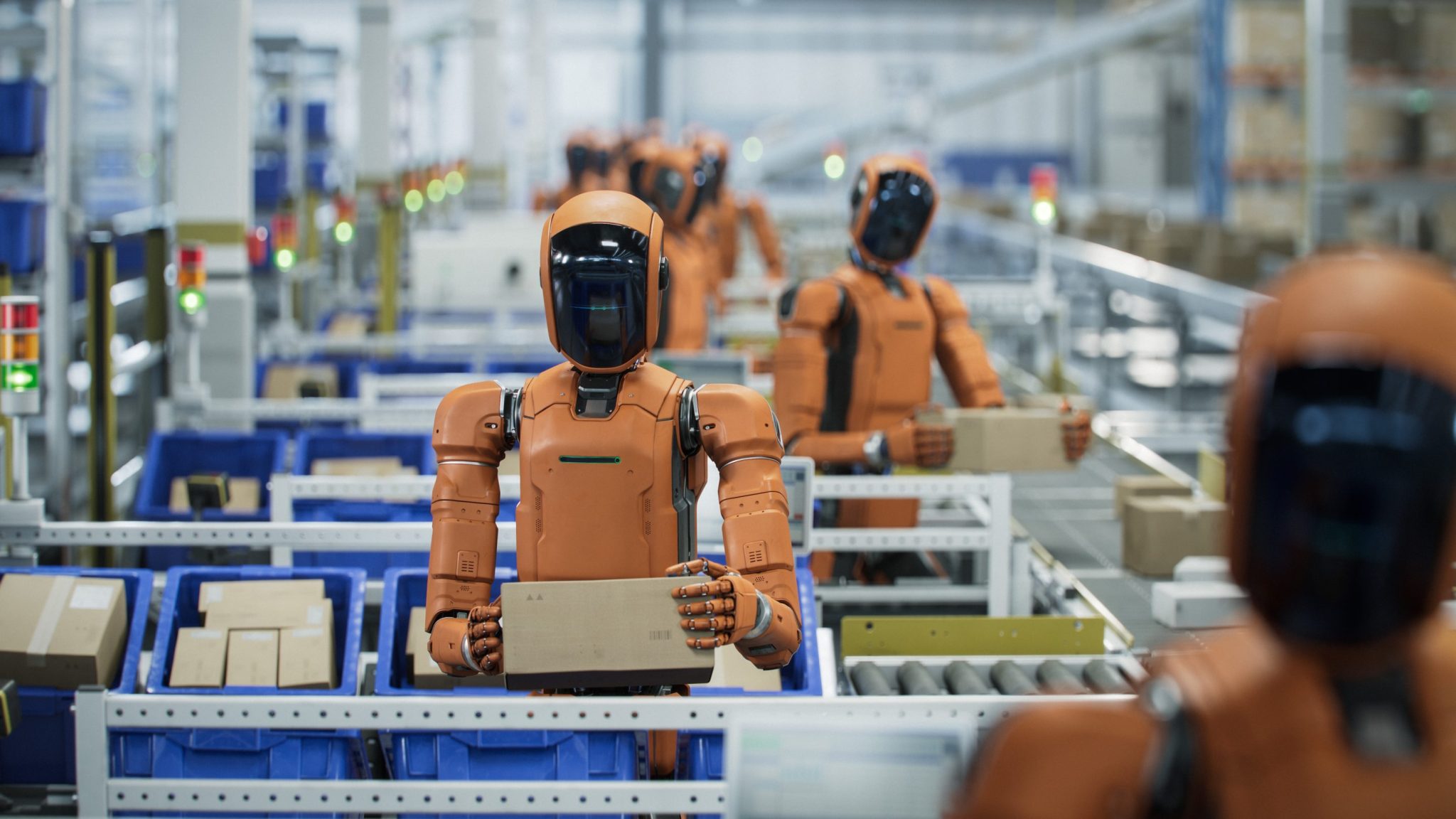
The true cost of industrial robots varies from $2 to over $35 per hour depending on utilisation, not just purchase price. A robot's economic value depends on how many hours it actually works in messy real-world conditions.
01Summary
- 01A Roland Berger study put running costs at $2 per hour, excluding purchase; JPMorgan estimates $10–12 per hour including hardware; early deployments report over $35 per hour.
- 02Agility Robotics' Digit robots logged over 65,000 hours across nine customer sites, with net sales of $1.78 million against a $140.2 million operating loss in its S-4 filing.
- 03Agility's own model shows a $400,000 robot over five years costs about $40 per hour on one shift but $20 per hour on two shifts; it becomes cheaper than a $30 worker only above 2,700 hours per year.
- 04A $90,000 industrial robot amortised over five years at 2,000 hours per year contributes about $9 per hour in hardware, rising to $18 if utilisation halves.
- 05High utilisation alone cannot save a robot that fails when conditions vary; factories and warehouses present constant exceptions from ideal lab conditions.
02Why it matters
These cost figures determine whether physical AI becomes a trillion-dollar labour market or remains a collection of expensive pilots. Operations leaders evaluating automation must focus on utilisation and reliability, not just theoretical hourly rates.
Pulse AIAsk about this story
Answers are generated by AI from the story summary; they are not investment, health or legal advice.