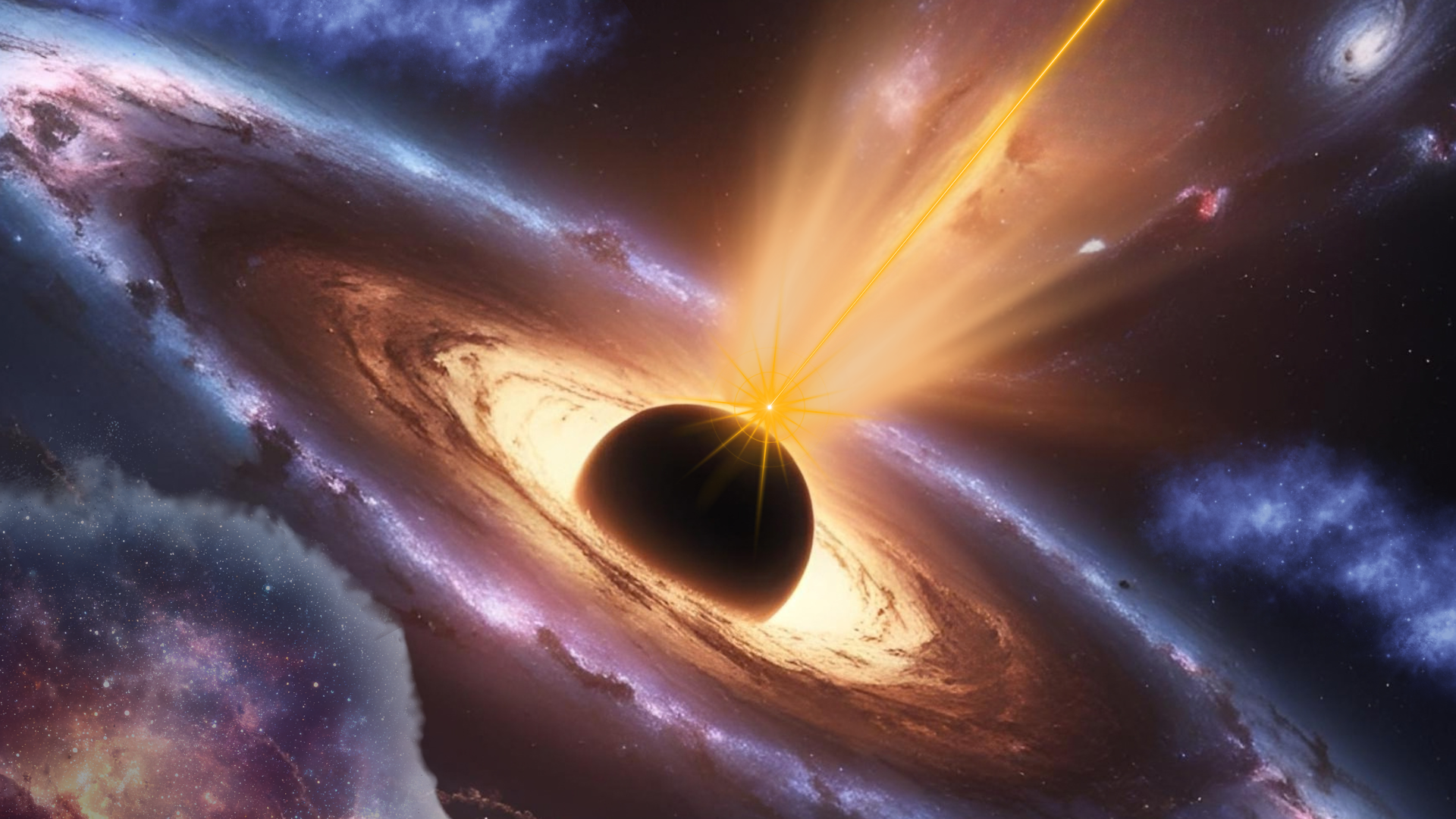
Using NASA’s Swift spacecraft, astronomers saw a supermassive black hole in NGC 1275 flare in X-rays and, about 300 days later, produce radio jets. They estimate its mass at between 100 million and 1 billion times the Sun.
01Summary
- 01The black hole sits at the centre of NGC 1275 in the Perseus Cluster, around 225 light-years away.
- 02The strongest X-ray flare was seen in February 2023 and lasted less than 60 days, with two 5-day bursts.
- 03The flare doubled the X-ray brightness of the active galactic nucleus and was not thought to be caused by a tidal disruption event.
- 04The team estimates the black hole’s mass at between 100 million and 1 billion solar masses.
- 05Researchers found tentative evidence of about a 300-day delay between the X-ray flare and the radio emission from the jet.
02Why it matters
The findings help astronomers understand how matter falling into a black hole is linked to the jets it launches. That could improve knowledge of how black holes affect their host galaxies and star formation.
Pulse AIAsk about this story
Answers are generated by AI from the story summary; they are not investment, health or legal advice.